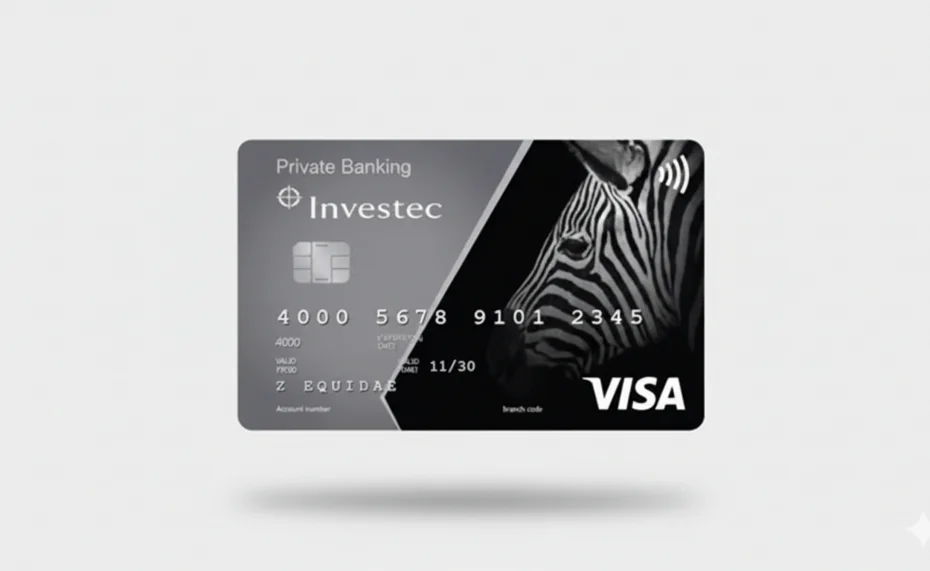
Most South Africans will never qualify for this account.
There, I said it. The Investec Private Bank account card isn’t for everyone. Actually, it’s deliberately designed to exclude most people. You need to earn at least R800,000 annually if you’re over thirty. Under thirty? R600,000 minimum.

More information about credit cards
Below we share some articles related to this topic. Read them!
My accountant friend Marcus got his Investec card about two years back. He mentioned the R675 monthly fee casually, like it was nothing. I nearly choked on my coffee. That’s R8,100 per year just to have a bank account.
But then he showed me what he gets for that fee. And honestly, I started understanding why he doesn’t complain.
Look, this isn’t a card for someone chasing cashback on groceries. It’s built for professionals who travel internationally, manage multiple currencies regularly, and value having actual bankers available around the clock. If that’s not you, skip to the last section where I’ll suggest alternatives.
What Makes This Different From Regular Banking
Standard bank accounts give you a card and maybe some rewards if you’re lucky.
Investec takes a completely different approach with private banking south africa style. Everything consolidates into one account. Your transactional banking, credit facilities, multiple currencies, rewards program. Single monthly fee covers it all.
The card itself is a Visa Platinum. Works everywhere Visa works, obviously. But it’s also multicurrency-enabled through what they call “currency pockets.” You can hold rands, dollars, pounds, and euros simultaneously. Switch between them with a few taps on the app.
Marcus travels to London quarterly for consulting work. Previously he’d buy forex each trip, carry cash, worry about exchange rates. Now he funds his pound pocket when rates look decent and spends directly from it abroad. The card automatically routes transactions to the right currency.
The Intelligent Routing Thing
This is genuinely clever, I’ll admit.
Buy something in Cape Town? Transaction pulls from your rand balance. Online purchase from an American site? Dollar pocket gets charged. Dinner in Paris? Euro pocket handles it. You don’t select anything manually. The system figures it out based on transaction currency.
When Marcus first explained this, I was skeptical. Sounded like it could create confusion. But he’s been using it for months without issues. Says he actually forgets it’s happening because it just works.
The Rewards Program Nobody Talks About Properly
Investec Rewards operates differently than most programs.
No membership fee. Points never expire. You earn on basically everything you do with Investec, not just card spending. Banking, investing, insurance premiums, borrowing. The more products you use, the faster points accumulate.
The redemption ratio is 20 points per R1. So if you’ve got 20,000 points, that’s R1,000 in value. You can redeem toward your account fee, buy vouchers, book travel, even donate to charity.
Marcus earned enough points last year to cover about four months of his account fees. He uses Investec for everything though. Personal banking, business account, vehicle finance. If you’re just using the card casually, don’t expect miracles.
Earning Isn’t Automatic
This is the part Investec’s marketing glosses over.
Yes, you earn unlimited rewards credit card points. But the rate depends on how much you’re actually using their services. Someone with just the private bank account earns slower than someone financing property through them, holding investments, paying insurance premiums.
My colleague Sarah opened an account last year. She was disappointed with point accumulation initially. Then her private banker explained she’d earn more if she consolidated services. She moved her car insurance over. Suddenly points started adding up noticeably faster.
That Monthly Fee Needs Honest Discussion
R675 monthly. R340 if you’re under thirty.
Let’s be clear about what this covers. Unlimited local ATM withdrawals. International ATM withdrawals too, though the foreign bank might still charge their own fee. All transactional banking. Online and app access. Your private banker and 24/7 support team. Travel insurance when you buy tickets with the card.
But does it make financial sense? Depends massively on your situation.
Marcus travels internationally at least six times yearly. Uses multiple currencies constantly. Has complex banking needs. For him, R675 monthly is reasonable. He’d probably pay more piecing together equivalent services elsewhere.
Someone earning R800,000 who mostly does domestic banking and travels once a year? Probably overpaying significantly. Standard premium banking account from another bank would likely suffice.
Hidden Costs Exist
That R675 covers your main account. Secondary accounts for spouses cost less but aren’t free. Vehicle finance through Investec might get you prime minus 1%, which sounds great, until you realize the application and admin fees.
International currency conversion happens at Visa’s rates. Usually competitive, but not always the absolute cheapest available. If you’re moving significant amounts, compare rates carefully.
The Multicurrency Feature Actually Works
I was cynical about this initially. Sounded like marketing hype.
But it’s genuinely useful if you deal with foreign currency regularly. Open a currency pocket in five clicks through the app. Fund it from your rand balance. Keep money there until you need it. Earn rewards on spending from any pocket.
The forex management account aspect helps with exchange rate timing. See the pound weakening? Fund your GBP pocket. Planning a New York trip in three months? Load dollars when the rate favors you.
Sarah uses this aggressively for her online business. She invoices American clients in dollars. When payments arrive, she leaves them in her dollar pocket until she needs rands. Saved her quite a bit when the rand was particularly weak.
Regulatory Classification Matters
Money in currency pockets counts as offshore from a regulatory perspective, though it stays in South Africa physically. This affects your annual allowances under exchange control regulations.
Transfers from rands to a currency pocket count toward your Single Discretionary Allowance. That’s currently R1 million per person annually. Business-related foreign payments have different rules. This gets complicated fast.
Marcus nearly exceeded his allowance accidentally. His private banker caught it and helped him structure things differently. Having someone who actually watches this stuff proved valuable.
Airport Lounge Access Is Genuinely Unlimited
Most cards give you limited lounge visits. Four per year. Eight if you’re lucky.
Investec provides unlimited airport lounge access unlimited globally through their InTransit app. Both domestic and international. No annual cap. Just download the app, register your card, walk into any participating lounge.
Marcus uses this constantly. Says it alone almost justifies his fees. He arrives at airports early, works from lounges with decent WiFi and coffee. Showers before long flights. Avoids airport chaos entirely.
I tried it once when traveling with him. OR Tambo’s Bidvest lounge at midday. Peaceful, well-stocked, genuinely comfortable. Made the usual airport experience look miserable by comparison.
The InTransit App
Separate from the main Investec app. Specifically for travel benefits.
Shows you which lounges participate globally. Provides digital passes. Tracks your usage if you want. Also offers things like fast-track security at some airports, though availability varies by location.
Sarah mentioned the app interface feels dated compared to modern fintech apps. Works fine, just doesn’t feel premium. Small complaint given the functionality.
Private Banking Actually Means Something Here
You get assigned a private banker when you open the account. Not a call center. An actual person you can phone directly.
Marcus calls his banker maybe twice monthly. Quick questions about transactions, forex timing, account features. Response time is typically under an hour. For complex issues, they schedule calls or meetings.
The 24/7 global support team handles urgent matters when your banker isn’t available. Someone always answers. They’re actually helpful, according to both Marcus and Sarah. Not reading from scripts.
What This Costs Beyond Fees
Time, honestly.
Setting everything up took Marcus about three weeks. Documentation requirements are strict. Proof of income, residence, identity. FICA compliance. If you’re applying under professional criteria, you need qualification verification.
Then learning the system. Understanding currency pockets, rewards earning, how to actually leverage the private banker relationship. Sarah said she felt overwhelmed initially. Took her about two months to feel comfortable with everything.
Who This Makes Sense For
Be honest about your actual needs.
This account works brilliantly for certain people. High-income professionals who travel frequently. Business owners managing international transactions. Anyone regularly dealing with multiple currencies. People who value personal service over digital-only banking.
Marcus fits this perfectly. International consultant, complex finances, values having humans to call. Worth every rand of fees.
Skip this if you’re earning exactly R800,000 and stretching to qualify. Domestic-focused professionals who travel occasionally. Anyone who’d stress about the monthly fees. People who prefer simple, straightforward banking.
Young Professionals Consideration
Under thirty? The R340 monthly fee makes this more accessible.
Investec clearly wants to lock in high earners early in their careers. Get you comfortable with their ecosystem before you turn thirty and fees double.
Smart if you’re a young consultant, lawyer, doctor starting out. Probably excessive if you’re a graduate earning R600,000 in your first job with no international exposure.
Alternatives Worth Considering
Investec isn’t the only premium banking services option.
Standard Bank’s Private Banking offers similar services. Different fee structure, comparable benefits. Some people prefer their approach. Nedbank has a private wealth management division targeting the same market.
Discovery’s banking product works well for health-conscious professionals. Integrates with Vitality. Different philosophy entirely. Lower fees, less personalized service.
Capitec’s Global One account offers multicurrency features without the hefty monthly cost. Obviously not private banking, but functionality exists if that’s what you need.
FNB’s Private Clients
Another solid alternative in high net worth banking. Been around longer than Investec’s offering. Some people swear by their service quality.
Fee structures differ. Benefits package varies. Worth comparing if you’re seriously considering premium banking account options. Marcus looked at FNB initially, chose Investec for the multicurrency implementation specifically.